Meta Title: Bangladesh RMG Tax Reduction Demand 2026
Meta Description: Garment exporters urge the government to reduce source tax to survive rising costs and global competition.
Bangladesh’s garment exporters are urging the government to reduce source tax rates as the industry faces increasing financial pressure.
Currently, exporters are required to pay a 1% source tax. However, industry leaders are calling for a reduction to between 0.5% and 0.65% to help businesses survive.
Rising Costs and Falling Orders
The demand for tax relief comes at a time when production costs are rising and new orders are declining. Energy shortages, global inflation, and logistical challenges have all contributed to the situation.
Exporters argue that without policy support, many factories may struggle to remain operational.

Competitive Pressure from Other Countries
Bangladesh is also facing increasing competition from countries such as Vietnam and India. These countries are offering competitive pricing and more stable production environments.
Impact on Employment
The garment sector employs millions of workers in Bangladesh. Any slowdown in the industry could have serious implications for employment and social stability.
Government Response
While the government has not yet made a final decision, discussions are ongoing. Policymakers are considering various options to support the industry while maintaining fiscal balance.
📰 4. Energy Shortage Forces Bangladesh to Rethink Industrial Strategy
Meta Title: Bangladesh Energy Crisis 2026 | Industry Impact
Meta Description: Bangladesh faces energy shortages affecting industries, prompting new strategies for sustainable growth.
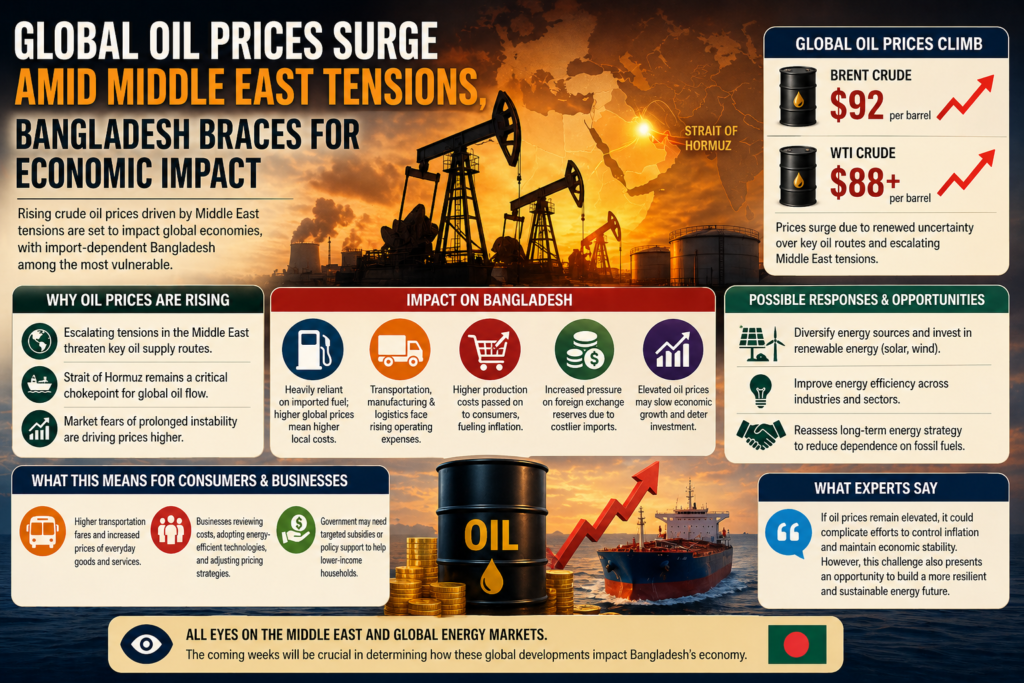
Bangladesh is currently facing a significant energy crisis that is impacting industries across the country. From manufacturing to small businesses, the effects are being felt everywhere.
Fuel Dependency a Major Concern
The country relies heavily on imported fuel, making it vulnerable to global price fluctuations. Recent geopolitical tensions have further disrupted supply chains.
Industrial Output Declines
Factories are struggling to maintain production levels due to limited power supply. Many businesses are now operating below capacity.
Shift Towards Renewable Energy
In response, the government is exploring renewable energy options such as solar and wind power. Experts believe this could reduce dependency on imports and ensure long-term stability.