Global oil markets have entered another phase of volatility as geopolitical tensions in the Middle East intensify, raising concerns about supply disruptions and long-term price instability. This sudden spike in crude oil prices is not just a regional issue, it is sending shockwaves through global economies, including import-dependent countries like Bangladesh.
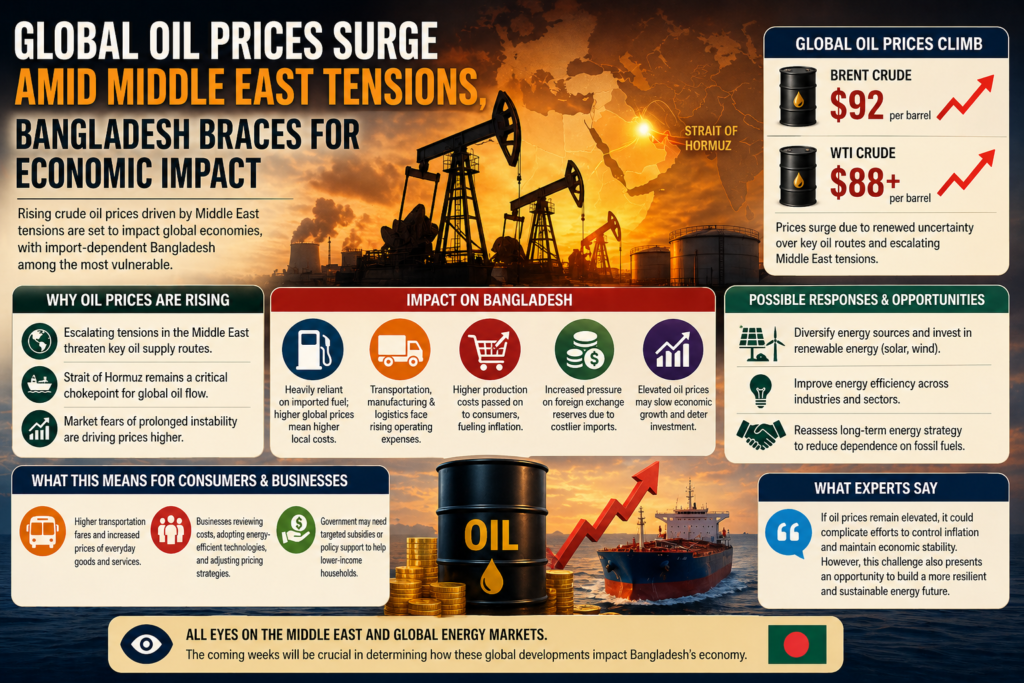
In the latest trading sessions, Brent crude oil climbed close to $92 per barrel, while U.S. West Texas Intermediate (WTI) followed a similar upward trend. Analysts attribute this sharp increase to renewed uncertainty surrounding key oil transit routes, particularly in the Strait of Hormuz, a critical passage through which a significant portion of the world’s oil supply flows.
Market experts suggest that even minor disruptions in this region can have a disproportionate impact on global energy prices. With tensions escalating and no clear diplomatic resolution in sight, traders are reacting cautiously, pushing prices higher amid fears of prolonged instability.
For Bangladesh, the implications are immediate and significant. As a country heavily reliant on imported fuel, any sustained rise in global oil prices directly affects domestic energy costs. The government has historically adjusted local fuel prices in response to international trends, meaning consumers and businesses may soon face higher expenses.
Industries such as transportation, manufacturing, and logistics are particularly vulnerable. Increased fuel costs can lead to higher production expenses, which are often passed on to consumers in the form of rising prices for goods and services. This chain reaction contributes to inflationary pressure, a challenge that Bangladesh has already been grappling with in recent months.
Economists warn that if oil prices remain elevated, it could complicate the country’s efforts to stabilize inflation and maintain economic growth. Higher energy costs also place additional strain on foreign exchange reserves, as more dollars are required to pay for imports.
At the same time, global investors are closely monitoring central bank responses. Rising oil prices often lead to higher inflation, which can prompt central banks to maintain or even increase interest rates. This, in turn, can slow down economic activity and reduce investment flows into emerging markets.
Despite these challenges, some experts believe there may be opportunities for Bangladesh to reassess its energy strategy. The current situation highlights the importance of diversifying energy sources and investing in renewable alternatives such as solar and wind power. Reducing dependence on imported fossil fuels could provide long-term stability and resilience.
Local businesses are already taking precautionary measures. Many companies are reviewing their cost structures, exploring energy-efficient technologies, and adjusting pricing strategies to cope with potential increases in operating expenses.
Consumers, meanwhile, are likely to feel the impact through higher transportation fares and increased prices of everyday goods. The government may need to consider targeted subsidies or policy interventions to cushion the effects on lower-income households.
As the situation continues to evolve, all eyes remain on the Middle East and global energy markets. For Bangladesh, the coming weeks will be crucial in determining how deeply these global developments affect the local economy.