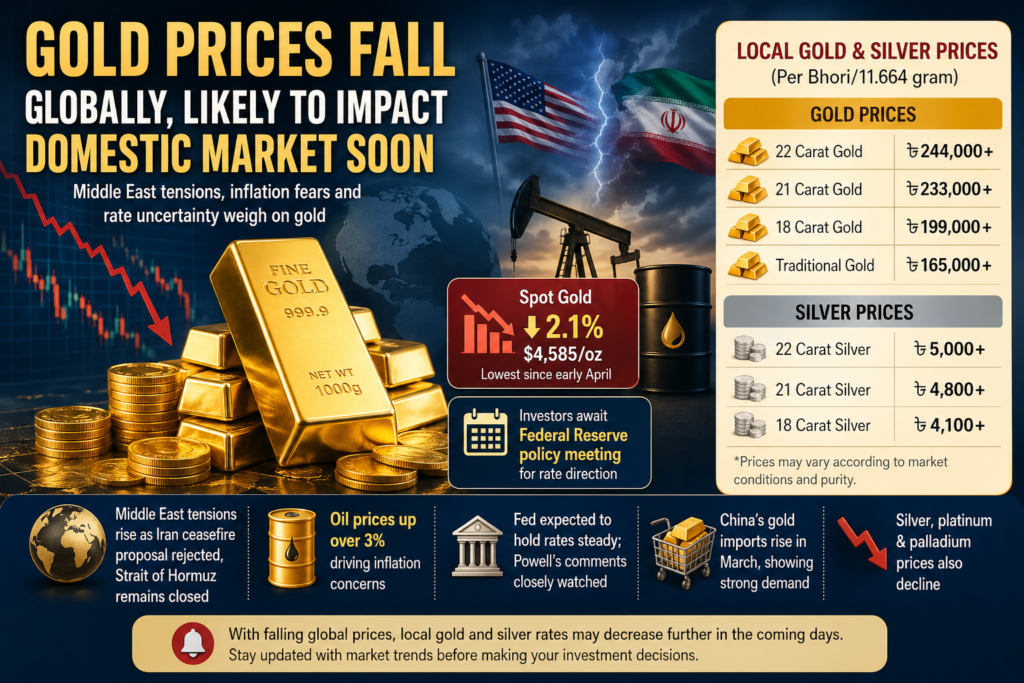
Global gold prices have dropped significantly, and this decline may soon affect the domestic market as well. Uncertainty in the Middle East has increased after U.S. President Donald Trump expressed dissatisfaction with Iran’s latest ceasefire proposal. This situation has intensified concerns about inflation worldwide. As a result, gold prices in the international market fell to their lowest level in nearly a month on Tuesday. Investors are also closely watching the upcoming Federal Reserve policy meeting.
According to international reports, spot gold prices fell by about 2.1%, reaching around $4,585 per ounce, the lowest level since early April. Similarly, U.S. gold futures for June delivery declined by roughly 2%.
Market analysts say tensions in the Middle East are rising again instead of easing. The rejection of Iran’s proposal has kept the Strait of Hormuz effectively closed, disrupting oil supply. This has pushed oil prices higher and renewed inflation concerns.
The ongoing conflict, which has lasted for two months, has become more complicated due to the lack of agreement on a ceasefire. It has already caused disruptions in energy supply, rising inflation, and significant loss of life.
With limited oil supply from the Middle East, oil prices have increased by more than 3%. However, the impact has been somewhat offset by the United Arab Emirates’ announcement to exit the OPEC alliance.
Higher oil prices typically lead to increased inflation and raise the possibility of higher interest rates. While gold is often seen as a hedge against inflation, rising interest rates tend to reduce the appeal of non-yielding assets like gold.
Investors expect the Federal Reserve to keep interest rates unchanged at this week’s meeting, though remarks from Chair Jerome Powell will be closely followed. Decisions from other major central banks, including the European Central Bank, the Bank of England, and the Bank of Canada, are also in focus.
Meanwhile, China, the world’s largest gold consumer, increased its gold imports in March compared to February, indicating strong demand.
Other precious metals also saw price declines. Silver, platinum, and palladium all dropped in the global market.
Due to the fall in international prices, local gold and silver prices may also decrease. According to the Bangladesh Jewellers Association, domestic prices are usually adjusted in line with global trends.
In the latest adjustment, gold and silver prices in the local market were reduced. Currently, 22-carat gold is priced at over 244,000 taka per bhori (11.664 grams), with different rates set for 21-carat, 18-carat, and traditional gold.
Silver prices also vary by purity, with 22-carat silver selling at just over 5,000 taka per bhori.