Bangladesh’s ready-made garment (RMG) industry, long considered the backbone of the country’s export economy, is facing a new wave of challenges as global buyers diversify their sourcing strategies. While the country remains one of the world’s largest apparel exporters, increasing competition from emerging manufacturing hubs is reshaping the global textile landscape.
In recent months, international brands and retailers have begun spreading their orders across multiple countries, including Vietnam, India, and Indonesia. This shift is driven by a combination of factors, including rising production costs, supply chain disruptions, and the need to reduce dependency on a single sourcing destination.
Industry insiders say that buyers are adopting a “China+1” or even “Bangladesh+1” strategy, where production is distributed across different countries to minimize risk. This approach gained momentum during the COVID-19 pandemic, when supply chain disruptions exposed vulnerabilities in global manufacturing networks.
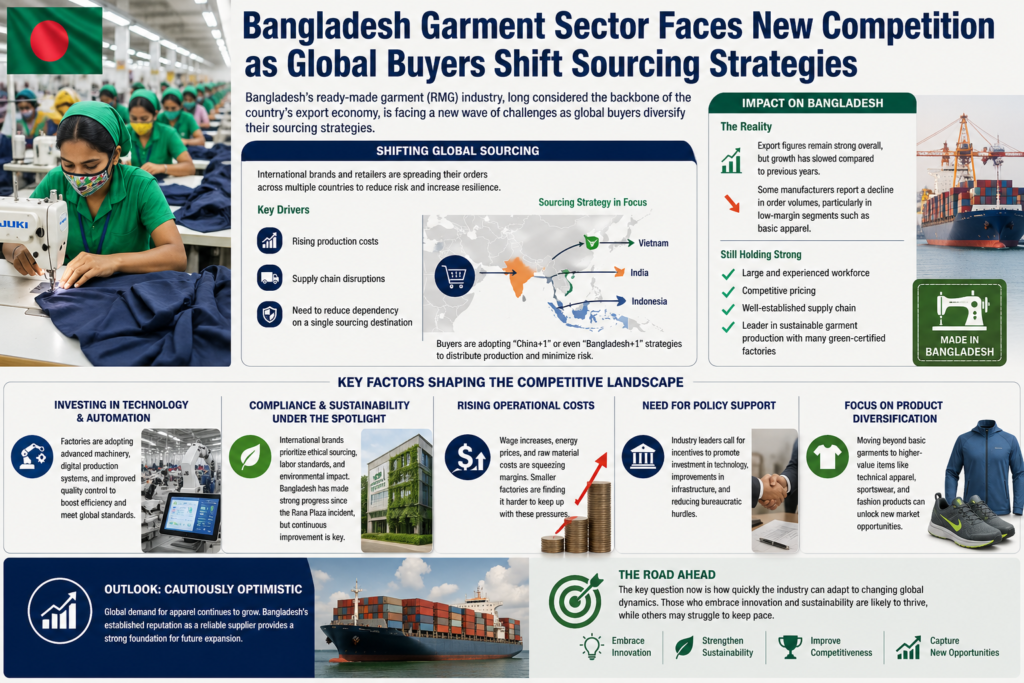
For Bangladesh, the impact is already becoming visible. While export figures remain strong overall, growth has slowed compared to previous years. Some manufacturers report a decline in order volumes, particularly in low-margin segments such as basic apparel.
However, the situation is not entirely negative. Experts believe that Bangladesh still holds significant advantages, including a large and experienced workforce, competitive pricing, and a well-established supply chain. The country also leads in sustainable garment production, with numerous factories certified as environmentally friendly.
To stay competitive, many local manufacturers are investing in automation and technology. Advanced machinery, digital production systems, and improved quality control processes are helping factories increase efficiency and meet the evolving demands of global buyers.
Compliance and sustainability have also become critical factors. International brands are placing greater emphasis on ethical sourcing, labor standards, and environmental impact. Bangladesh has made notable progress in these areas since the Rana Plaza incident, but continuous improvement is essential to maintain buyer confidence.
Another key challenge is rising operational costs. Wage increases, energy prices, and raw material costs are putting pressure on profit margins. Smaller factories, in particular, are finding it difficult to keep up with these changes.
Government support and policy reforms could play a crucial role in addressing these challenges. Industry leaders are calling for incentives to encourage investment in technology, as well as measures to improve infrastructure and reduce bureaucratic hurdles.
At the same time, there is a growing focus on product diversification. Moving beyond basic garments to higher-value items such as technical apparel, sportswear, and fashion products could help Bangladesh capture new market opportunities.
Despite the challenges, the long-term outlook for the RMG sector remains positive. Global demand for apparel continues to grow, and Bangladesh’s established reputation as a reliable supplier provides a strong foundation for future expansion.
The key question now is how quickly the industry can adapt to changing global dynamics. Those who embrace innovation and sustainability are likely to thrive, while others may struggle to keep pace.