Bangladesh’s e-commerce sector is experiencing unprecedented growth, driven by rapid digital adoption, changing consumer behavior, and improved logistics infrastructure. What was once a niche market has now become a major force in the country’s retail landscape.
In recent years, the number of online shoppers has increased significantly, with more consumers turning to digital platforms for convenience, variety, and competitive pricing. This trend has been further accelerated by the widespread use of smartphones and mobile internet.
Industry data shows that online transactions have surged, particularly in categories such as fashion, electronics, and groceries. The upcoming festive season is expected to push sales even higher, with e-commerce platforms preparing for a spike in demand.
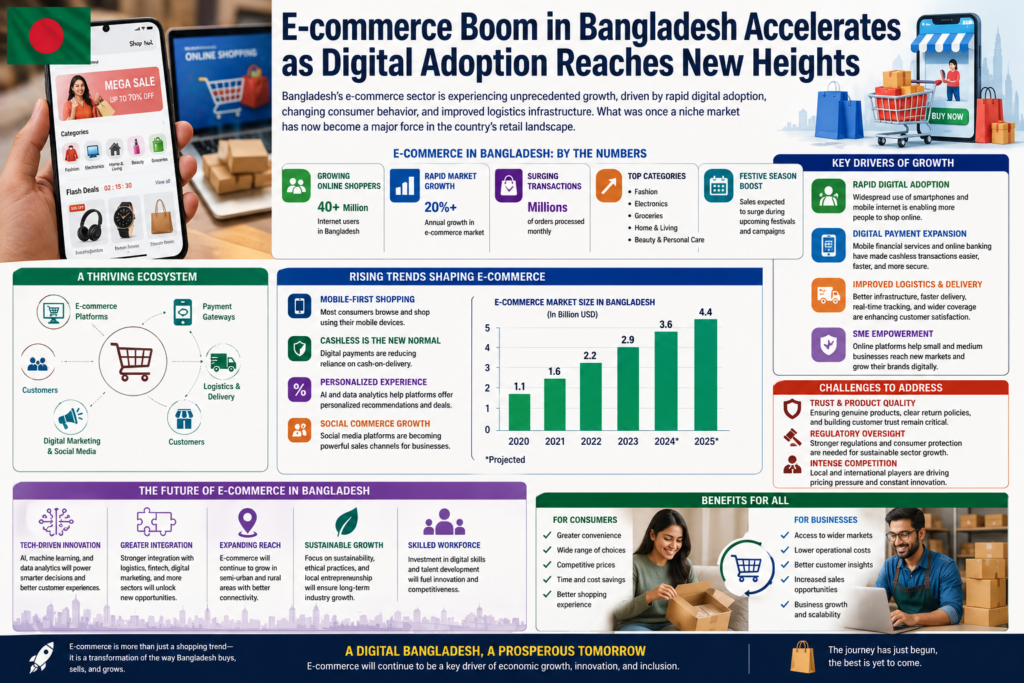
One of the key drivers of this growth is the expansion of digital payment systems. Mobile financial services and online banking have made it easier for consumers to complete transactions securely and efficiently. Cashless payments are gradually becoming the norm, reducing reliance on traditional cash-on-delivery methods.
Logistics and delivery services have also improved significantly. Faster delivery times, better tracking systems, and expanded coverage areas are enhancing the overall customer experience. Even in semi-urban and rural areas, e-commerce is gaining traction as delivery networks continue to expand.
Small and medium-sized enterprises (SMEs) are among the biggest beneficiaries of this digital transformation. Online platforms allow them to reach a wider audience without the need for large physical investments. Many local businesses are now using social media and e-commerce marketplaces to grow their brands.
However, the sector is not without challenges. Issues such as product quality, return policies, and customer trust remain areas of concern. Regulatory oversight and consumer protection measures are essential to ensure sustainable growth.
Competition is also intensifying, with both local and international players vying for market share. This has led to aggressive pricing strategies, promotional campaigns, and continuous innovation in service offerings.
Experts believe that the future of e-commerce in Bangladesh is closely tied to technological advancements. Artificial intelligence, data analytics, and personalized marketing are expected to play a bigger role in shaping the industry.
Furthermore, the integration of e-commerce with other sectors, such as logistics, fintech, and digital marketing, is creating new opportunities for growth and collaboration.
For consumers, the benefits are clear: greater convenience, more choices, and competitive prices. For businesses, the challenge lies in adapting to a rapidly evolving digital environment.
As Bangladesh continues its journey toward becoming a digital economy, e-commerce is set to remain a key driver of growth. The coming years will likely see even greater innovation and expansion, solidifying the sector’s position as a cornerstone of the country’s business ecosystem.